
Palestine is not a place easily described.
It’s a place where, before you say anything, you have to ask yourself: what am I really allowed to say?
That I met good people?
That something here moved me?
And is it even appropriate to say that?
Because Palestine is a land you enter through checkpoints — like at an airport.
With guards, questions, suspicion.
And you feel strange because you can come and go.
Because you have a passport.
Because you can return home.
Because you were born somewhere else.
You’re not better than anyone — but you have something denied to others here every day: freedom.
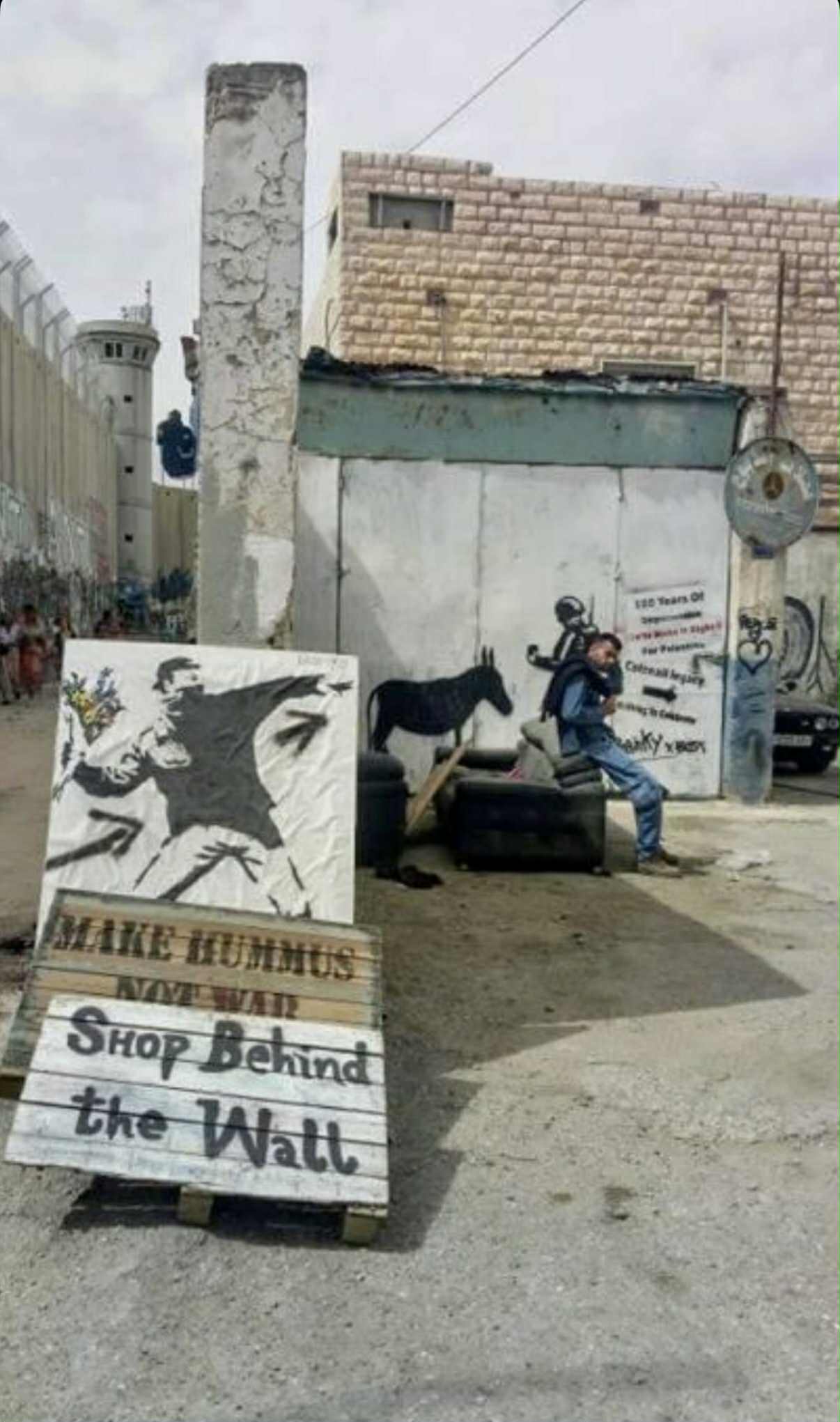
Here, children play soccer under walls that cut across horizons.
People eat breakfast while looking at the ruins of buildings where their neighbors once lived.
Behind them, police vehicles patrol. Before their eyes—helplessness.
But in their gaze, there is something more.
Strength. Dignity. Faith that even if the world doesn’t see them—they see each other.
And they want to endure.
Banksy painted on these walls.
Not as a tourist. Not for fame.
His stencils are love letters to human suffering.
A dove wearing a bulletproof vest. A girl searching a soldier. A boy pulling a cloud of balloons.
Sometimes only when you see something up close do you understand the weight of things you’ve only read about before.
And the most important images stay with you forever—even if you don’t realize it at the time.
Palestine is sobering.
It brings you down to earth.
Especially if you’ve been floating above it too long—in comfortable ignorance.
It’s a place that hurts but also teaches.
Teaches that not everything is black and white.
That the world is cruelly unfair—not only to us.
It’s not heaven.
But it’s not hell either.
It’s people.
It’s life.
It’s history written in everyday moments, where every smile is an act of courage.
But Palestine is also more.
It’s the land where olive trees grew long before the word “conflict” existed.
It’s a cuisine full of spices, sesame, fresh herbs, and pomegranate juice pressed right on the market.
It’s Ramallah with cafes where young people read Mahmoud Darwish’s poetry.
It’s Bethlehem, known worldwide but rarely truly visited.
It’s Hebron, Nablus, Gaza—mosaics of history no textbooks teach.
It’s women in embroidered dresses, tatreez, telling stories of generations.
It’s crafts that have survived longer than any border.
It’s the sound of the oud, the rhythm of the dabke, children’s laughter in courtyards—despite everything.
It’s the landscapes of Samaria’s mountains and valleys smelling of thyme and rain.
Palestine has been—and still is—alive.
Not just as an idea, but as a place.
It cannot be erased. It cannot be forgotten.
And you can’t see it without becoming at least a little different person forever.
