

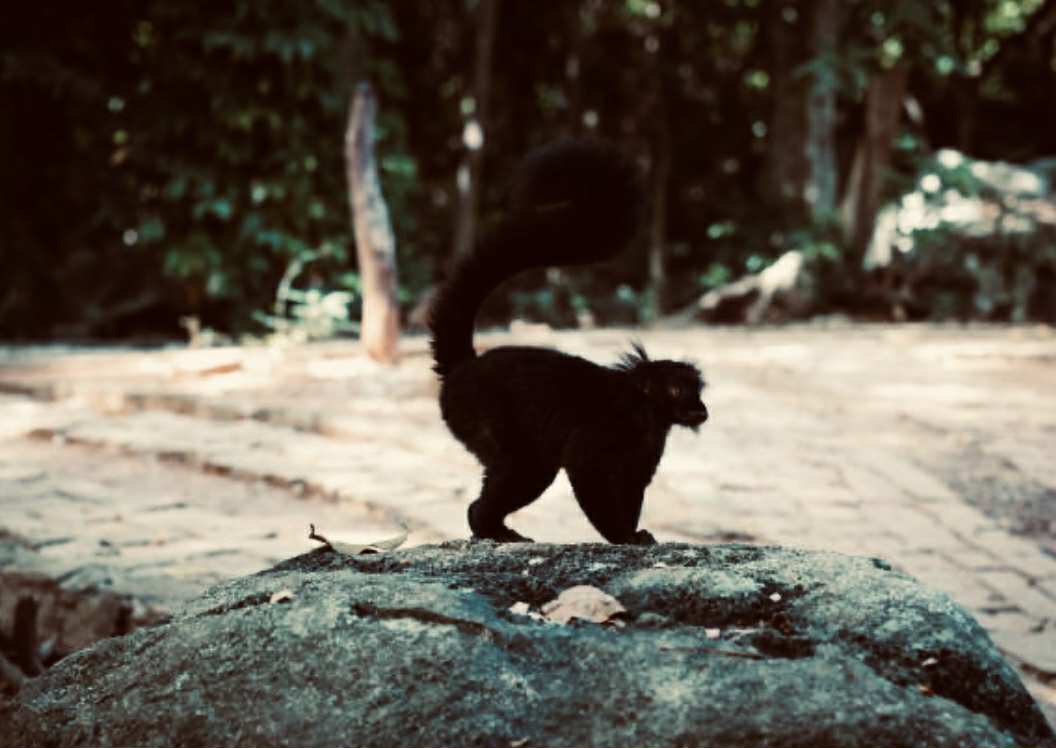
Madagascar
Madagascar — a dark and steamy land where the earth breathes moisture and the air smells of life. An island detached from the continent and from time. A green empire that has yet to be fully tamed by humans. The rainforest here seems to whisper in languages no one understands anymore, and the plains writhe under the sun like ancient tales etched into the bark of baobabs.
Anthony Bourdain called Madagascar “an exotic empire of taste and contrasts” — and it’s hard to find a better description. It’s a place where nature and humanity exist in delicate symbiosis. Where lemurs leap from tree to tree like ancestral spirits moving between worlds. Where chameleons, blended into the background, look as if they wish to become transparent against the vastness and mystery that surrounds them. And above it all — silent baobabs, guardians of space, whose thick trunks remember more than any human could bear.
Madagascar’s culture is built on rituals. Daily life is not just reality, but also spirituality. Hiragasy dances in colorful costumes, smiles worn like amulets, and above all, famadihana — the turning of the dead, a ritual celebrating the connection between life and death. Here, the past doesn’t leave. It dances, sings, and returns.
Malagasy cuisine features fresh fish, seafood, baked bananas, coconut, vanilla, and cloves. Vanilla, for which Europeans travel from afar, because the Malagasy variety — intense, sweet, and rare — is among the most expensive in the world. Every meal is a story about the land and those who love it. Despite poverty, despite struggle.
Madagascar is also an island of stark contrasts: environmental degradation, poverty, lack of education, and access to water. The West views it as exotic, but here, daily life doesn’t always smell of vanilla. It’s a place full of inequalities — and that’s precisely why it’s so deeply moving.
Local guides take you to places where the road disappears and a story begins: from the Avenue of the Baobabs, through national parks teeming with lemurs, to rugged landscapes and traditional settlements where time flows differently.
Madagascar is not just a place.
It’s a state of mind. Skin darkening from the sun. Humidity that gets under your clothes and stays in your thoughts.
It’s an island that teaches humanity respect for nature — and how easily it can be hurt, destroyed, changed irrevocably.
You can communicate with nature. But only when you are quiet. When you truly listen.

?? Madagascar — an island of mysteries, where nature writes its own story in colors, scents, and sounds.
